Population3,840Population
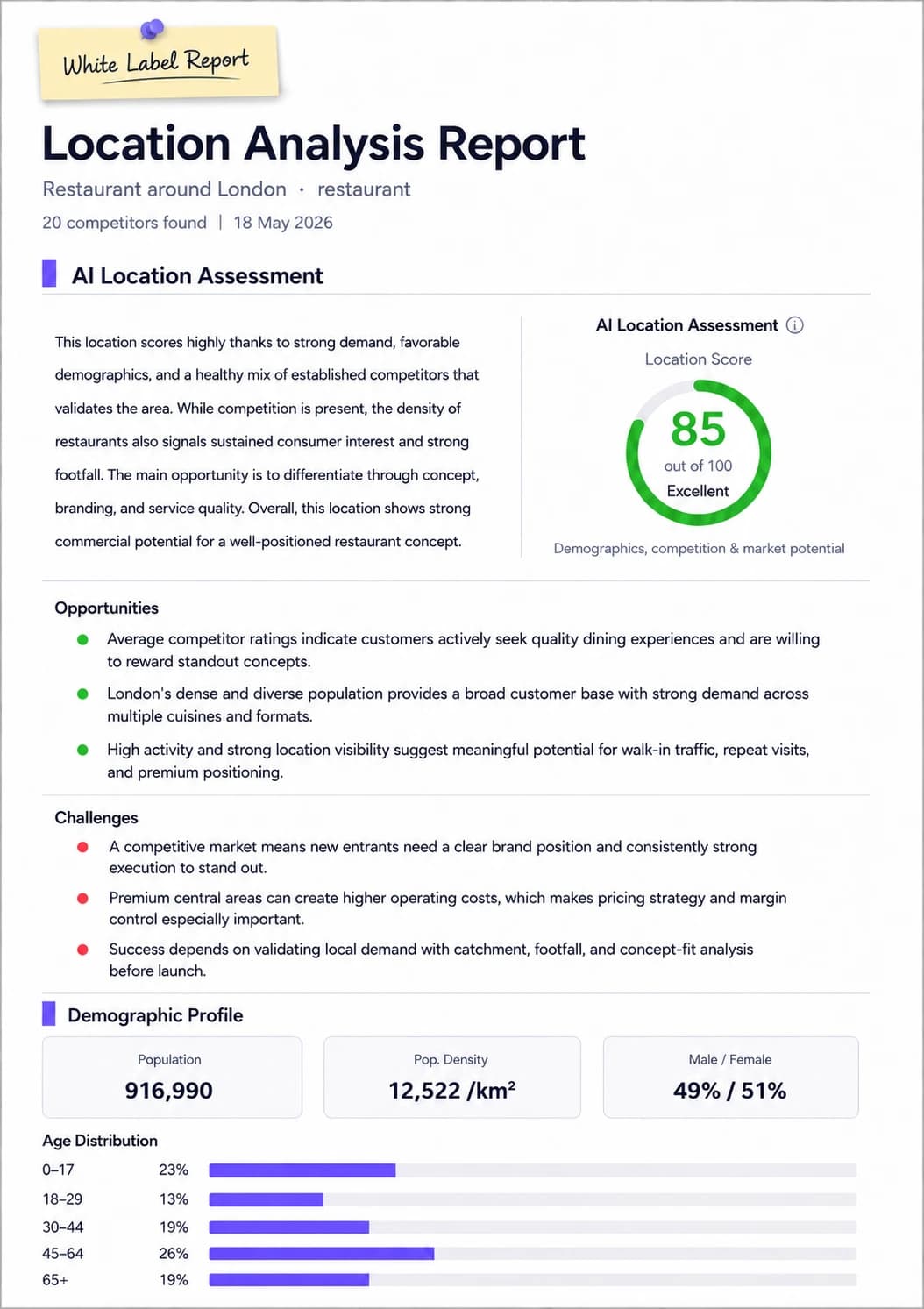
Population and gender breakdown for the central catchment area.
Male 49% Female 51%


Every pin has a story
Data you can trust


A LOCATION IS A LIVING STORY
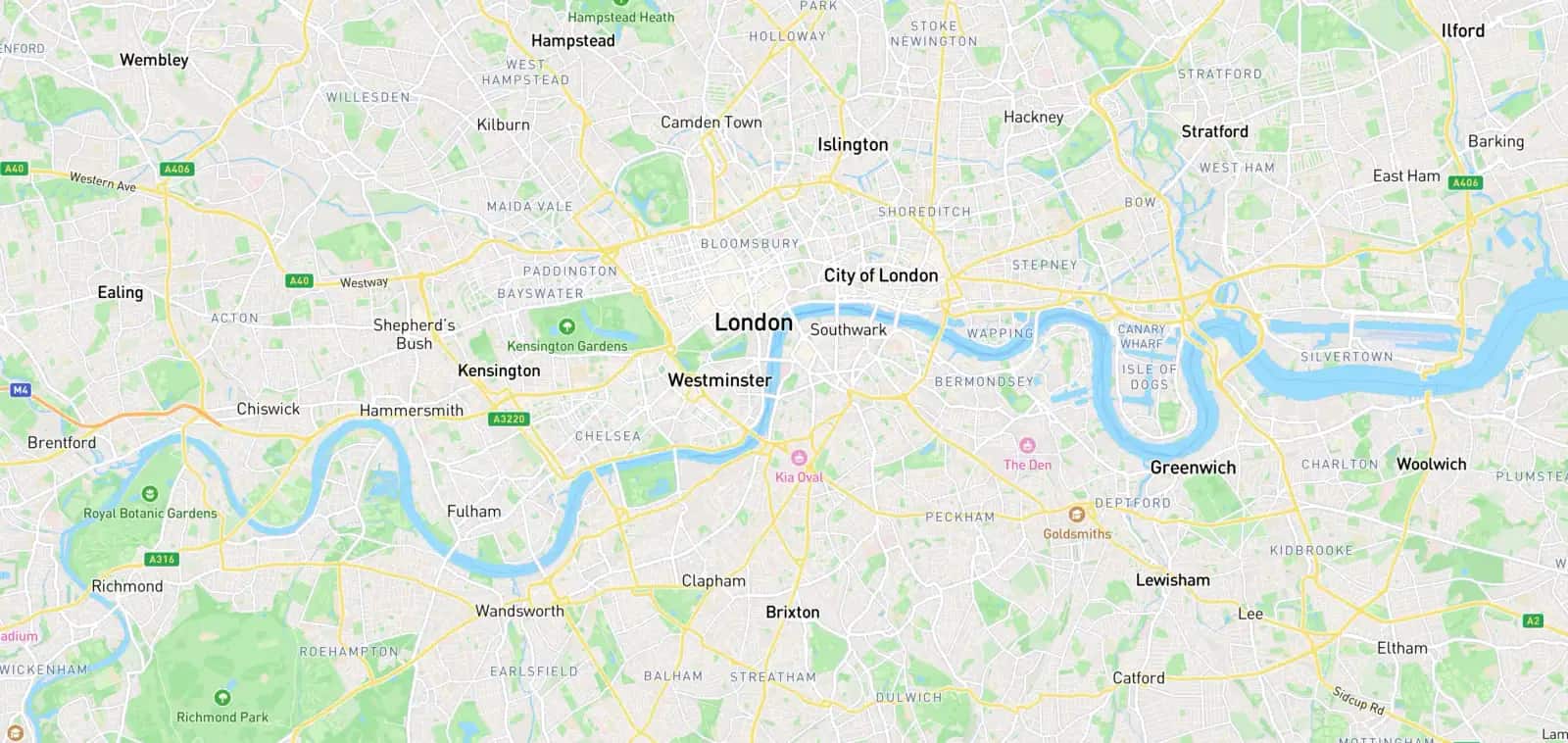
A pin makes an address look tidy. The useful questions begin when you look beyond the boundary: what surrounds it, what moves through it, and what could change next.
THE SIGNALS
Population and gender breakdown for the central catchment area.
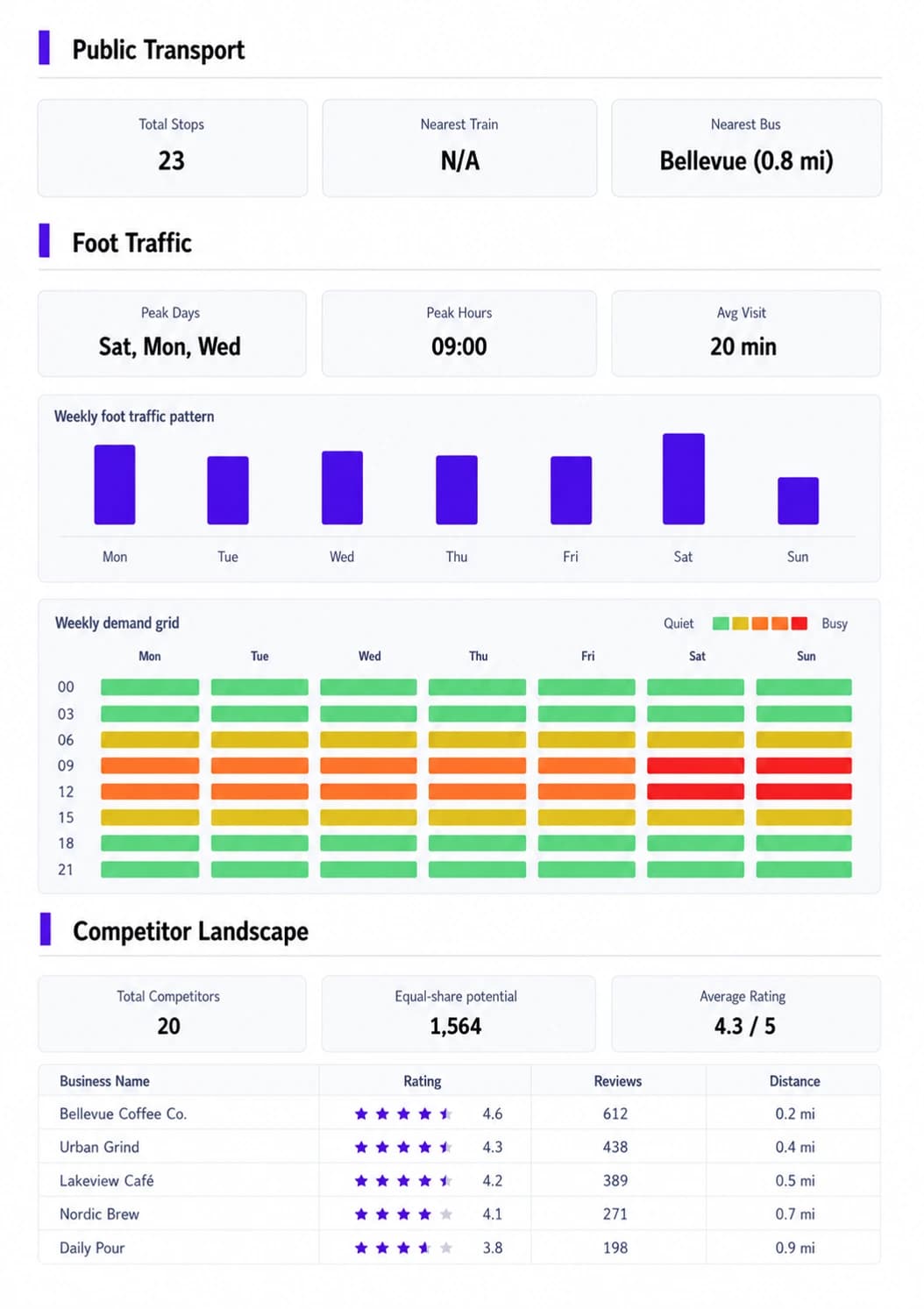
Foot traffic strength and its seven-day pulse in the central area.

Four nearby competitors shape the central area’s competitive intensity.

The assessment combines local signals into a clear opportunity read.

The decision
When it is time to share the decision, the story is already there: the local context, the trade-offs, and the evidence behind the next step.
Full research is available with a paid plan or a $15 one-time location report.
LOOK BENEATH THE ADDRESS
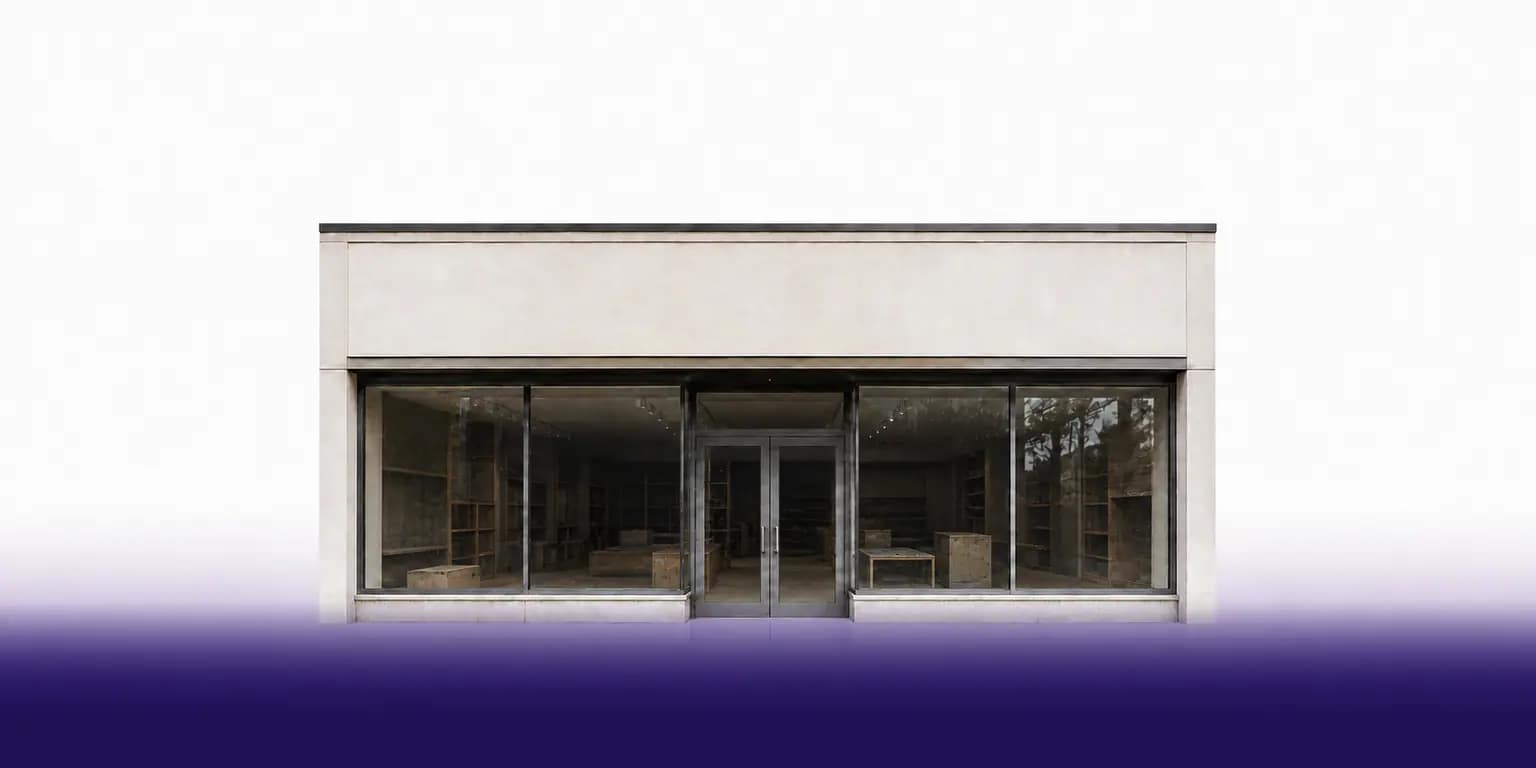
Showing the storefront before the decision is understood.
Monitor with Pulse
Pulse turns reviews, competitor movement, reputation and market rank into a live read of what has changed since the first decision.
See Pulse demoBuilt for
Each path maps to a real workflow: advising on property, planning a network, or defending an existing business as the local market landscape shifts.

Build a defensible location report for a viewing, pitch, lease negotiation, or landlord meeting.

Compare territories, shortlist trade areas, and reduce cannibalisation risk before rollout.

Track reputation, local search visibility, review sentiment, competitors, and local market changes.
Start with free map access, then choose the research, assessment, or monitoring workflow for your next location decision.
For entrepreneurs who already have shortlisted sites to validate
Loading price/mo
Billing details are unavailable. Please refresh before subscribing.
For CRE advisors and teams who want client-ready site reports
Loading price/mo
Billing details are unavailable. Please refresh before subscribing.
For growing teams researching areas, sites and commercial premises
Loading price/mo
Billing details are unavailable. Please refresh before subscribing.
For operators who already have locations and want weekly movement
Loading price/mo
Billing details are unavailable. Please refresh before subscribing.
Need just one report?
One location · full research and AI assessment · PDF export · $15 once, no subscription.
Locus helps entrepreneurs, operators and property professionals judge business locations. It brings demographics, nearby competition, access, demand indicators and available commercial premises into one map so a site can be investigated before more time or money is committed.
Anyone can browse the map and use the measuring tools. A free account adds a basic snapshot for one location: population, density and gender. You can also request one free, limited site analysis with a work email without creating an account. Full research is available with an eligible paid plan or a $15 one-time location report; saving, projects, comparisons and commercial property search depend on your plan.
A preview is the basic location snapshot available after sign-up: population, density and gender. A research run fetches fresher nearby-business evidence and unlocks the deeper sections included in your plan. A run is counted only after you choose a location and business category and confirm the analysis.
The free site analysis requires a work email and is a limited first look at a location, with a nearby-business table capped at five entries. The $15 location report gives you one full research run with deeper location evidence, the full available competitor table, AI assessment and PDF export. It is a one-time purchase with no subscription. Paid subscriptions include research runs and additional features according to the plan.
Ask Locus is the map assistant. It can understand a place and business brief, navigate the map, change catchment settings, inspect available evidence, find commercial premises and help move suitable options into comparisons, shortlists or projects. It asks before using a metered research or property-search allowance.
Commercial listings are fetched from the selected inventory provider when you run a property search. Locus shows the source listing and available price, size, tenure and feature information, but availability can change between refreshes. The listing agent remains the authority for current terms and availability.
The United Kingdom and United States have the deepest demographic coverage, including local income and household signals where available. Other markets can use global population and age estimates through WorldPop and supported regional sources. Fields that cannot be supported are hidden or clearly marked unavailable rather than inferred from the map viewport.
Treat Locus as decision support, not a valuation, planning opinion or guarantee of business performance. Reports explain the evidence used, distinguish measured data from estimates and flag what still needs local verification, such as lease terms, frontage, planning use, unit condition and current availability.
Paid-plan monthly allowances reset on your account billing cycle. A free account includes a demographic snapshot for one location, without a monthly full-research allowance. A $15 one-time location report covers one research run and does not renew. Paid plans may also include separate allowances for agent or property-search workflows; the interface shows the remaining allowance before a metered action runs.
Tell us about the location decision you are trying to make.